A haircut may seem like an ordinary act of grooming. But for many queer people, stepping into a barbershop or salon can come with a set of assumptions that have little to do with hair: Who are you? What should you look like? What kind of haircut is appropriate for your gender?
This is the space that Barbierro Barbershop set out to challenge.
Founded in 2022 by queer partners Paul Sumayao and Jedi Directo, Barbierro Barbershop positions itself as the Philippines’ first queer barbershop—not simply because it welcomes LGBTQIA+ customers, but because its business model, service culture, and community work are shaped by a queer perspective.
At its heart, Barbierro Barbershop asks a deceptively simple question:
What would a barbershop look like if it stopped assuming what a customer should be based on their gender?
The answer can be seen through six pillars.
1. Queer Ownership: Building the Space We Wish Existed
Barbierro Barbershop’s queerness begins with its founders.
Before Barbierro Barbershop existed, its founders had experienced the discomfort of traditional barbershops and the expectations around masculinity that often come with them.
That experience became part of the reason Barbierro Barbershop was created.
This distinction matters. Barbierro Barbershop did not begin by identifying LGBTQIA+ people as an underserved market and designing a marketing campaign around them. It began with a lived experience of exclusion and the desire to create something better.
In that sense, Barbierro Barbershop’s proposition is simple:
We built the barbershop we wanted to have.
The result is a business whose queer identity isn’t an advertising layer applied after the fact. It is part of the reason the business exists in the first place.
2. Gender-Neutral Services: Your Haircut Doesn’t Have a Gender
Perhaps the clearest way Barbierro Barbershop puts its values into practice is through its pricing and service structure.
Traditional grooming businesses often divide services into “men’s” and “women’s” categories. That division can seem harmless, but it embeds assumptions about what different genders are supposed to want—and how much they should pay.
Barbierro Barbershop deliberately removes that distinction.
Its haircut pricing is based on factors such as complexity and time, rather than whether the customer is a man or a woman.
The principle is straightforward:
Charge for the hair, not the gender.
This is more than inclusive language. It is an operational decision that changes the transaction itself.
It also gives customers greater freedom to ask for the haircut they actually want—without having to first determine whether that haircut belongs in the “men’s” or “women’s” category.
3. SOGIE Competency: Inclusion Has to Exist Behind the Chair
A Pride flag can tell someone they are welcome. But the real test begins when they sit down for their haircut.
That’s why Barbierro Barbershop’s approach to inclusion extends to its employees. Its barbers undergo SOGIE training, helping them develop a better understanding of sexual orientation, gender identity, and gender expression.
This is particularly important because exclusion doesn’t always look like outright discrimination.
Sometimes it looks like a barber questioning why a trans man wants his long hair cut short.
Sometimes it is telling a queer woman that her short hair would look better long.
Sometimes it is assuming that every male customer wants to talk about sports, women, or other traditionally masculine subjects.
These seemingly small interactions can make an otherwise ordinary haircut uncomfortable.
Barbierro Barbershop’s answer is to make competence part of inclusion.
The goal isn’t merely to teach employees what not to say. It is to help them understand that customers arrive with different identities, expressions, preferences, and experiences—and that none of these should interfere with receiving good service.
4. Queer Visibility: Making Welcome Visible
Barbierro Barbershop doesn’t hide its identity.
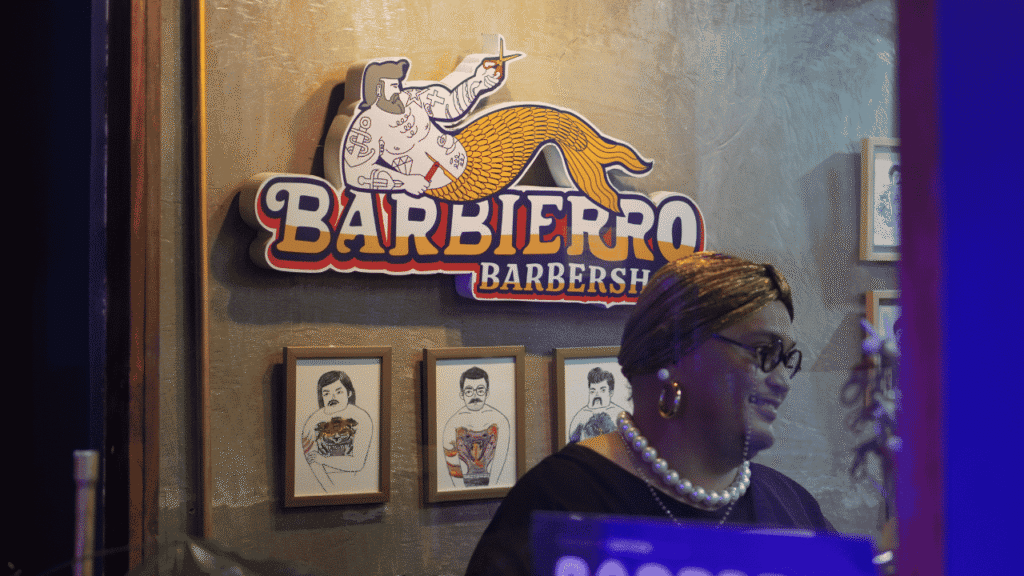
Pride flags, queer artwork, and distinctive branding make the shop visibly different from the conventional masculine environment associated with many barbershops.
That visibility serves an important function.
For someone who has previously felt uncomfortable in a barbershop, walking past a Pride flag can answer a question before they ever enter:
“Is this a place where I can be myself?”
The answer is yes.
But visibility also has a broader cultural role. Queer people are often expected to adapt themselves to spaces that weren’t designed with them in mind. By deliberately occupying a traditionally masculine space and transforming it, Barbierro Barbershop turns visibility into a form of participation.
It says that queer people don’t merely belong in salons or specialized LGBTQIA+ spaces.
They belong in barbershops, too.
5. Community: From Serving Queer People to Serving the Queer Community
A queer business becomes much more meaningful when its relationship with the community goes beyond selling something to queer customers.
Barbierro Barbershop has extended its advocacy through initiatives such as GUPITCREW, which provides haircut training and tools to marginalized transgender and queer youth. The program is designed to give participants practical skills that can potentially become a source of livelihood.
This changes the role of the barbershop.
It is no longer simply a place where queer people consume a service.
It becomes a place where queer people can learn, work, create, and build community.
That distinction is important because genuine community-building asks a different question from traditional marketing.
Instead of asking:
“How do we get more LGBTQIA+ customers?”
it asks:
“What can this business contribute to the LGBTQIA+ community?”
That is a much deeper relationship.
6. Queer-Centered, But Not Queer-Exclusive
Perhaps the most important—and most misunderstood—part of Barbierro Barbershop’s identity is that being a queer barbershop doesn’t mean being a barbershop only for queer people.
In fact, Barbierro Barbershop deliberately creates a safe space for everyone.
Straight and cisgender customers are part of its clientele. Parents come in. People with disabilities have also found the environment comfortable.
This reveals something fundamental about the Barbierro Barbershop model:
Queer-centered does not have to mean queer-exclusive.
Instead, the shop takes lessons from queer experiences—particularly the experience of being judged, categorized, or made to feel like you don’t belong—and applies those lessons universally.
If a barbershop can make a queer person feel comfortable without making a straight person feel uncomfortable, everyone benefits.
The result isn’t a space that asks customers to identify themselves before they can belong.
It’s a space where identity simply isn’t used as a reason to treat someone differently.
Beyond the Rainbow
Anyone can put a Pride flag in a window.
Anyone can post “LGBTQIA+ friendly” on social media.
Anyone can change their logo during Pride Month.
What is harder to replicate is a queer perspective embedded throughout the business.
For Barbierro Barbershop, that perspective appears in who founded the company, how services are priced, how barbers are trained, how the physical space communicates welcome, how the business engages with the community, and how customers are ultimately treated.
That is what turns queer-friendly into something more meaningful:
queer-informed, queer-centered, and queer-built.
And perhaps that is the most compelling thing about Barbierro Barbershop.
It isn’t trying to create a special place where queer people can get haircuts.
It is demonstrating what a barbershop can look like when nobody has to leave part of themselves at the door.